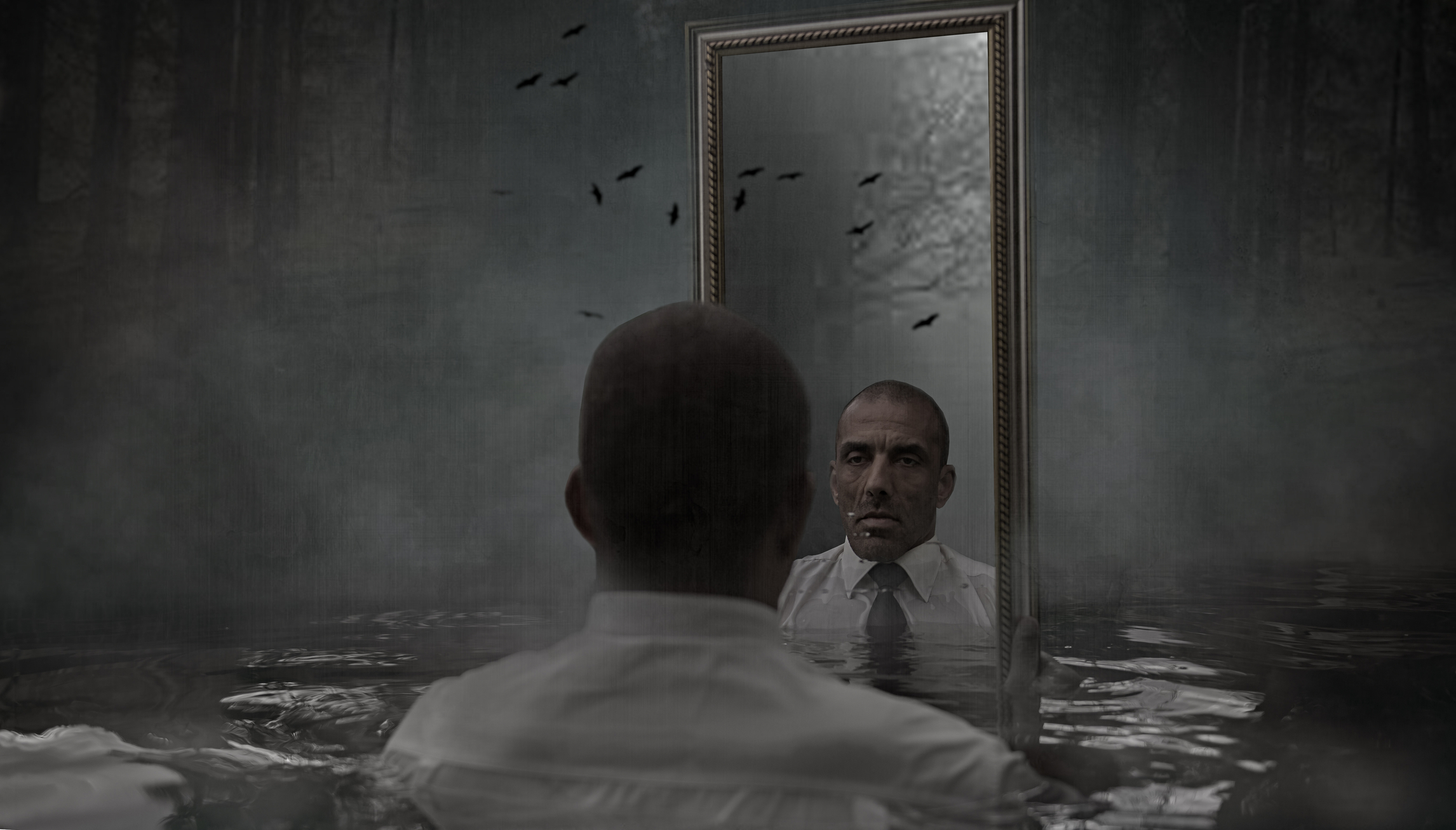
What if some of the patterns you call “who I am” are actually patterns your nervous system has simply learned to repeat?
The Chemistry of the Inner Victim: When Familiar Survival Starts to Feel Like Identity
Someone sends you a message:
“Can we talk?”
Nothing else.
But within seconds, your mind begins filling in the blanks.
What did I do?
They’re upset with me.
Something must be wrong.
I’m going to have to defend myself.
The conversation hasn’t happened.
Yet your body may already be preparing for it.
Your heart rate changes. Your muscles tense. Your attention narrows. Your mind begins searching for evidence that confirms the story it has already started telling.
This is one of the most fascinating things about being human:
We don’t simply experience events. We interpret them. And those interpretations can influence what happens in the brain and body next.
What if some of the patterns we call personality are actually patterns we learned to survive?
What if the way we respond to criticism, rejection, conflict, uncertainty, or even success isn’t simply “who we are,” but something our minds and bodies have practiced for years?
And what happens when a survival strategy becomes so familiar that we stop recognizing it as a strategy at all?
We may begin to call it identity.
This is where the idea of the Inner Victim becomes especially interesting, not as a label for someone who has experienced genuine harm, but as a pattern of interpretation that can quietly keep us oriented toward what happened to us rather than toward what is possible now.
Over time, repeated interpretations can become familiar patterns.
And sometimes, the familiar becomes so powerful that we mistake it for identity.
Your Thoughts Are More Than Thoughts
Every thought is part of a biological process.
When we interpret an experience as threatening, our brain and body can mobilize resources for protection. Stress-related systems involving hormones such as cortisol and adrenaline can increase alertness, energy, and readiness to respond.
In the short term, this is incredibly useful.
Your nervous system is designed to help you survive.
The problem isn’t the stress response.
The problem is what happens when the system repeatedly predicts danger even when the present moment is relatively safe.
If you spend years living in emotional vigilance, defensiveness, people-pleasing, resentment, overwork, or fear of rejection, those responses can become increasingly familiar.
The nervous system learns from repetition.
And what it repeatedly experiences can begin to feel normal.
Not necessarily because it is healthy, but because it is familiar.
When Familiar Chemistry Feels Like Identity
This may explain something many people find confusing about change:
Why do we sometimes return to patterns we consciously want to leave behind?
Why does someone who desperately wants peace continue creating conflict?
Why does someone who wants to slow down feel guilty when they rest?
Why does someone who wants healthy relationships repeatedly choose relationships that recreate familiar emotional dynamics?
Why can success itself create anxiety in someone who has spent years surviving?
One possibility is that change isn’t simply a matter of motivation.
Change requires the nervous system to encounter something unfamiliar.
And unfamiliar does not always feel safe.
If your system has spent years associating safety with being needed, you may feel uncomfortable when you stop rescuing everyone.
If you’ve learned that achievement earns approval, rest may feel like failure.
If you’ve learned to anticipate rejection, trust may initially feel more dangerous than distance.
If you’ve spent years protecting yourself from disappointment, hope can feel surprisingly vulnerable.
The familiar often feels true.
It FEELS true because it has been repeated so often.
This is one reason people can unconsciously recreate circumstances they desperately want to escape.
The pattern is familiar.
And familiarity can easily be mistaken for safety.
The Brain Is a Prediction Machine
Our brains don’t wait passively for reality to happen.
They continually use previous experience to help anticipate what might happen next.
This is efficient. Prediction helps us navigate an uncertain world without having to consciously analyze every piece of information from scratch.
But efficiency has a downside.
A prediction can become a filter.
If you’ve repeatedly experienced criticism, your brain may become especially alert to signs of criticism.
If you’ve repeatedly experienced rejection, ambiguity may feel threatening.
If you’ve repeatedly experienced chaos, calm can feel strangely uncomfortable.
The brain isn’t necessarily saying:
“I want you to suffer.”
It’s doing something much more ordinary:
“I’ve seen this pattern before. Let’s prepare.”
That distinction matters.
Your nervous system isn’t your enemy.
It has been trying to protect you.
But a strategy that was useful in the past isn’t automatically useful in the present.
Meet the Inner Victim
At Positive Constructs, we use the language of the Inner Victim to describe a particular pattern of interpretation, not a person, and not a judgment about anyone who has genuinely experienced harm.
The Inner Victim asks:
“Why is this happening to me?”
The Inner Victim looks backward for blame, searches for evidence of unfairness, and waits for circumstances or other people to change before allowing itself to move forward.
Again, this isn’t inherently bad.
There are moments when we genuinely are victims of circumstances beyond our control.
Acknowledging harm is not weakness.
The problem begins when the identity of being acted upon becomes the only lens through which we can see our lives.
Because there is another voice available.
The Inner Leader
The Inner Leader witnesses the same event and asks a different question:
“What is this information giving me?”
The Inner Leader doesn’t deny pain.
It doesn’t pretend everything happens for a reason.
It doesn’t excuse other people’s behavior.
It simply looks for the next place where agency is possible.
The difference might look like this:
| The Inner Victim | The Inner Leader |
|---|---|
| “Why is this happening to me?” | “What is this showing me?” |
| Looks for blame | Looks for information |
| Focuses on what cannot be controlled | Identifies what can be influenced |
| Reacts automatically | Creates space before responding |
| Protects the familiar | Makes room for something new |
| Waits for circumstances to change | Asks what can change now |
The goal isn’t to destroy the Inner Victim.
The goal is to recognize when it has taken the wheel.
Then we can invite the Inner Leader back into the driver’s seat.
The Cycle That Creates Identity
Here’s where this becomes especially interesting.
We often assume our identity creates our behavior:
“I’m an anxious person, so I react this way.”
“I’m just a people-pleaser.”
“I’m naturally defensive.”
“That’s just who I am.”
But consider another possibility.
Experience → Meaning → Chemistry → Construct → Behavior → Identity
An experience happens.
We assign meaning to it.
That interpretation influences our emotional and physiological response.
Repeated interpretations become internal beliefs, assumptions, expectations, and mental models.
Those constructs influence behavior.
And repeated behaviors can eventually become part of the identity we believe we’ve always had.
For example:
Experience:
Your manager gives you critical feedback.
↓
Meaning:
I’m failing. They don’t respect me.
↓
Chemistry:
Your body moves into a stress response.
↓
Construct:
I have to prove my worth.
↓
Behavior:
You overwork, become defensive, or avoid asking for help.
↓
Identity:
I’m someone who can never be good enough.
Now imagine interrupting the cycle.
The experience is exactly the same.
But the meaning changes:
This feedback is uncomfortable, but it may contain useful information.
The body still feels the initial stress.
But instead of immediately reacting, you pause.
You breathe.
You become curious.
You ask a question.
You choose a different response.
That doesn’t magically erase the stress.
It does something more important:
It gives your brain a different experience to learn from.
Where Can the Cycle Be Broken?
The encouraging news is that you don’t have to wait until your entire personality changes.
You can interrupt the cycle at several points.
1. Challenge the Meaning
Ask:
What actually happened and what story did I add to it?
Those are not always the same thing.
2. Notice the Body
Before trying to change your thoughts, notice what your body is doing.
Are you tense?
Holding your breath?
Preparing to argue?
Trying to escape?
Scanning for danger?
Awareness gives you information.
3. Create a Pause
The pause doesn’t have to be dramatic.
Sometimes it’s one breath.
Sometimes it’s ten seconds.
Sometimes it’s choosing not to send the message while you’re emotionally activated.
The pause creates space between stimulus and response.
4. Ask the Leader’s Question
Instead of:
“Why is this happening to me?”
Try:
“What is this situation asking me to see, learn, change, communicate, or choose?”
The question doesn’t deny your experience.
It expands your options.
5. Practice the New Response
One new response won’t redefine you.
Repetition can.
Every time you respond differently, you give yourself evidence that another way of being is possible.
Awareness Changes What Becomes Possible
Awareness is often described as simply noticing.
But awareness can be much more powerful than that.
Awareness is the moment you realize:
“I’m having a reaction. I don’t necessarily have to become the reaction.”
You can feel anger without becoming destructive.
You can feel fear without allowing fear to make every decision.
You can feel rejected without concluding that you’re unworthy.
You can experience uncertainty without immediately creating a catastrophic story.
You can be hurt without building an identity around being hurt.
This is where change begins with recognition.
You Don’t Have to Become Someone Else
One of the most liberating ideas about personal growth is that you don’t need to erase your past.
Your past matters.
It shaped your expectations, your defenses, your relationships, and your understanding of the world.
But being shaped by something is not the same as being permanently defined by it.
The patterns that protected you may have been necessary once.
The hypervigilance.
The perfectionism.
The people-pleasing.
The emotional distance.
The need to control.
The constant need to prove yourself.
They may have made sense in the environment in which they developed.
But you are allowed to ask a new question:
“Do I still need this strategy now?”
That question can change everything.
Living Your Light
At Positive Constructs, Live Your Light has never meant pretending that hardship doesn’t exist.
It means recognizing that awareness creates choice.
We cannot control every experience.
We cannot rewrite the past.
We cannot prevent other people from disappointing us.
We cannot eliminate uncertainty from life.
But we can become increasingly aware of the meanings we attach to our experiences and the patterns those meanings create.
The Inner Victim may have a story.
Listen to it.
Understand it.
Thank it for the protection it was trying to provide.
But don’t automatically hand it the steering wheel.
Because the goal isn’t to become someone who never feels fear, anger, disappointment, or vulnerability.
The goal is to become someone who can experience those emotions without being completely governed by them.
Your past may explain some of your patterns.
It doesn’t have to define your future.
Your constructs can evolve.
Your responses can become more flexible.
Your relationship with uncertainty can change.
Your sense of agency can grow.
And the identity you once thought was fixed can begin to open.
The light isn’t something we have to manufacture.
Perhaps it is something we uncover as we gradually loosen the constructs that have been protecting us long after protection was needed.
The past may have shaped the person you became.
But awareness gives you a role in shaping the person you become next.
That is where survival begins to make room for possibility.
That is where the Inner Leader takes the wheel.
That is where we begin to Live Your Light.
A Question to Carry With You
Where in your life might you be responding from an old pattern and what might your Inner Leader choose instead?
You don’t have to change everything at once.
Sometimes change begins with something much smaller:
Noticing.
Noticing the story you are telling yourself.
Noticing what your body is preparing you to do.
Noticing when an old pattern has taken the wheel.
And then, in that small space between what happened and how you respond, remembering:
You have a choice.
If something in this reflection resonates with you, take one moment today to pause, become curious, and ask yourself:
“Am I responding from an old survival pattern or am I creating a new possibility?”
You don’t have to have all the answers.
Awareness is enough to begin.
And every new choice is an opportunity to move a little closer to the person you are becoming.
With love and celebration of your light,
Lee
Live Your Light.
Join the conversation!
Share this blog, leave a comment, and follow @positiveconstructs on Instagram for my Live Your Light – Mindset Bite series.
For tools, courses, and coaching to support stress regulation, conflict, emotional awareness, and grounded leadership, visit PositiveConstructs.com.


Extremely well written. Makes complex scenarios more understandable. Awareness seems attainable. Thank you,